

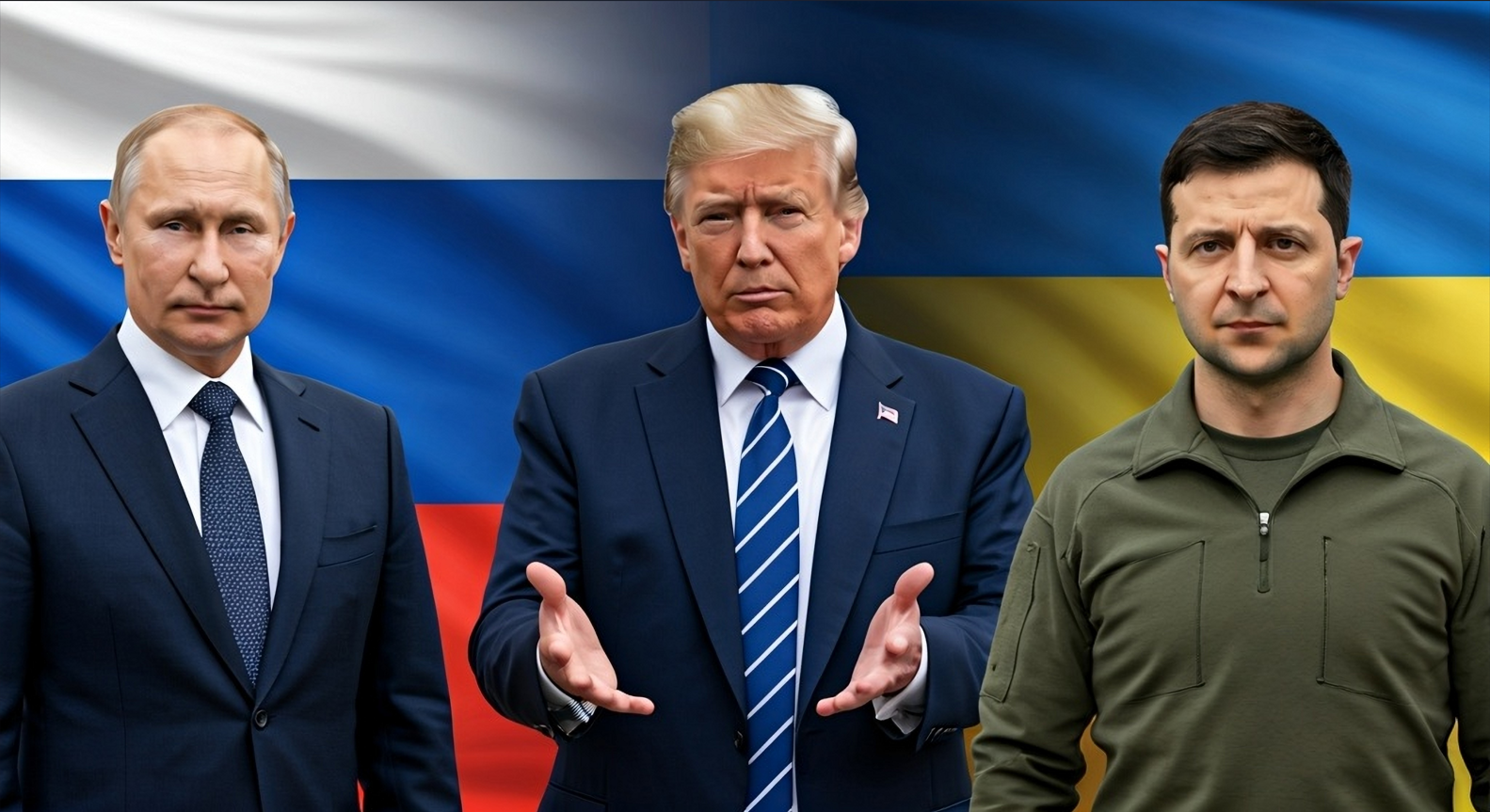
US special envoy to Ukraine, Steve Witkoff, travelled to Russia yesterday and spoke with Russian delegation in efforts of finding a comprehensively “fair” peace deal for the war in Ukraine. Albeit the talks being described as “constructive” by both parties, no deal has yet been reached, extending therefore the conflict until a future date.
The original 28-point plan proposed a few weeks back was categorically rejected by western powers, it was seen “one-sided” and rather extremely tilted against Ukraine. This time around with heavy involvement from European nations, led by figures like German Chancellor Merz and other leaders, a counterproposal was proposed, incorporating security assurances for Ukraine.
The new 19-point plan reportedly removed the worst parts or “features”, of the initial plan, such as the provision of amnesty for war crimes, the transference of ownership of frozen Russian assets held in European banks to America and responsibility for the reconstruction of Ukraine. Details for the flaming topic of territorial concessions has not been explicitly discussed so far, but early reports indicate that cessions to Russia in annexed regions like Crimea, Donbas, Kherson, and Zaporizhzhia could be included in the proposal.
The plan also emphasizes Ukraine’s sovereignty and its pledge to neutrality, abandoning its NATO aspirations and certain weaponry. Furthermore, NATO expansion was deemed as a no-no. As for the other side, Russia’s legislative non-aggression commitment toward Europe and Ukraine was put forth as a key point, but also the creation of a joint US-Ukraine-Russia-Europe security taskforce for safeguarding stability in the post war phase. Additional terms cover Ukraine’s reconstruction via frozen Russian assets (about €140 billion loan), mutual economic deals in energy and resources, and potential nuclear arms talks resumption, was noted at a Sky news report covering the talks.
An issue that could indeed pour fuel into the fire and aggravate hostilities is the case where the frozen assets held in banks never return to Russia. Under such a scenario, it wouldn’t be farfetched to propose that Russia would decide to prolong the war and capture far more territory and strike harsher Ukrainian targets. A failure of reaching a comprehensive deal could channel inflows towards gold and other assets deemed as safe havens. Should all parties however conclusively converge towards a concrete deal, gold is expected to face outflows alongside defence stocks and crude oil.
Technical Analysis
WTI Chart – Crude oil futures remain suppressed and inactive as traders eye Russia-Ukraine peace talk cessation
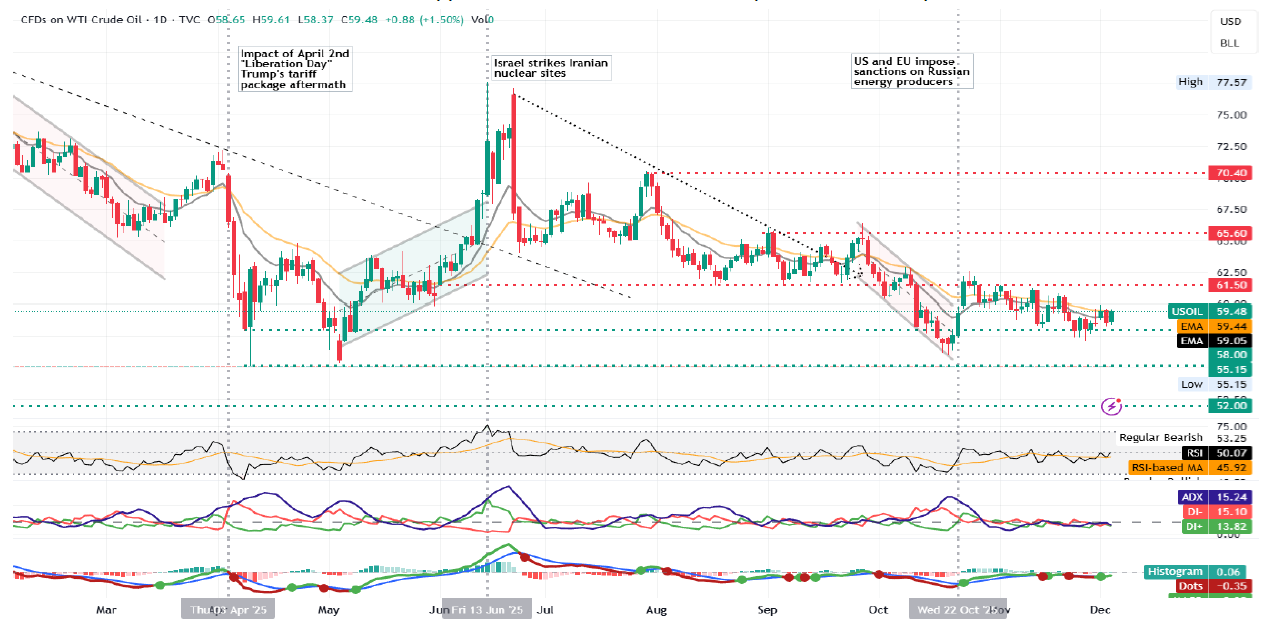
Resistance: 61.50 (R1), 65.60 (R2), 70.40 (R3)
Support: 58.00 (S1), 55.15 (S2), 52.00 (S3)