

The Future of Stock Trading is no longer confined to the iconic floors of Wall Street or the exclusive world of institutional investors. Instead, the market has moved beyond shouting brokers and paper tickets and evolved into a global digital ecosystem. Today, traders can access markets from smartphones, laptops, and tablets anywhere in the world.
Powered by technology, online platforms, and real-time data, stock trading has become faster, more inclusive, and deeply embedded in everyday life. As a result, professionals now place trades during their commute, while a new generation of digitally native investors learns through social media and online communities. In this environment, markets no longer depend on physical locations or traditional hierarchies.
However, this shift is not merely technological. Instead, it is reshaping how investors think, behave, and interact with financial markets. As innovation accelerates through artificial intelligence, automation, and global connectivity, understanding the future of stock trading also means understanding how finance itself is being redefined.
Wall Street and the end of an era in stock trading
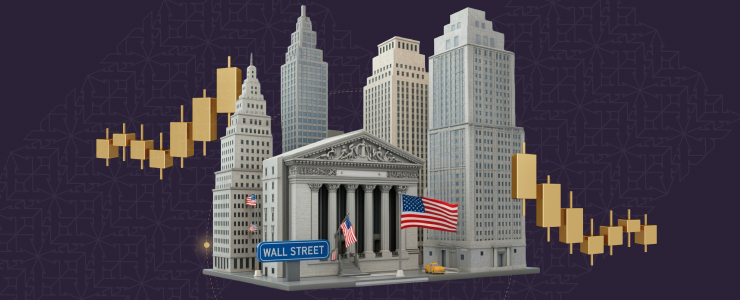
The physical trading floor was a theatrical space filled with rituals, signalling traders, and the chaotic rhythms of the market. Today, these floors symbolise a bygone era. Instead, digital trading replaces the drama with invisible networks that execute orders without human intervention. As a result, this shift sits at the centre of the future of stock trading.
With the rise of online trading, geographical boundaries have largely disappeared. As a result, traders around the world can interact with global markets using only an internet connection. At the same time, market hours have extended, and platforms now provide the forex information and analytics traders need. Because of this, the gap between retail and institutional investors continues to narrow, breaking down long-standing barriers and hierarchies.
The rise of retail investors in Global Financial Markets
Retail investors can now trade through platforms offered by trusted brokers such as Xlence, reflecting how accessibility is shaping the future of stock trading. As a result, intuitive interfaces, minimal entry costs, and instant execution allow traders to access multiple markets from home. In turn, they can explore opportunities with a click and participate in global markets with lower costs and greater support.
This new wave of investors is more knowledgeable and connected. As a result, they understand market trends and actively participate in online trading communities. Moreover, they experiment with different trading styles, draw influence from social media, and blend traditional market analysis with insights gathered online.
The smartphone is their online weapon, attached to their hands, so they can trade the markets at any time, manage accounts and get the latest news, exploring opportunities at every moment.
Low-Cost brokerages and the true cost of trading online
Many large brokers now offer highly competitive trading conditions. However, zero-commission trading can be misleading, as brokerages often charge fees through spreads, subscription tiers, or alternative pricing models. Because these costs are not always obvious, first-time traders should take time to explore a broker’s website and understand its processes. For example, opening a demo account, trading with virtual funds, and navigating the client portal can help clarify how the platform works.
Speed, automation, and high-frequency trading in modern markets
Speed is very important in online trading and even much more so in High Frequency Trading (HFT). Some companies invest millions in fibre-optic networks, co-location services and proprietary hardware to reduce execution times. The difference between milliseconds could translate into millions of dollars, shedding light on how technology and speed are essential to today’s markets.
Artificial intelligence and machine learning in stock trading
AI and machine learning process historical prices, macroeconomic indicators, and news sentiment to create probabilistic forecasts. As a result, they play a growing role in the future of stock trading. Moreover, predictive models identify trends and highlight patterns that human traders cannot easily detect, influencing everything from portfolio construction to risk assessment.
However, the growing use of AI also raises ethical concerns. Algorithms can influence pricing at scale, and transparency becomes more complex when models operate as “black boxes” that humans cannot easily decipher.
Cybersecurity risks in the digital trading ecosystem
Cyber threats target exchanges, brokers and retail platforms. From ransomware to insider manipulation, attacks are increasingly sophisticated and can have effects that are felt across interconnected financial systems.
Market stability now depends on robust architecture: encryption of communications, multi-layer authentication, real-time monitoring and disaster recovery systems.

Borderless markets and global participation in stock trading
Digital platforms have facilitated the participation of investors in emerging markets in the U.S., European, and Asian exchanges. This internationalisation widens capital flows and introduces diversity into market behaviour.
Markets never sleep. As a result, events in Tokyo or London can create instant ripple effects in New York and accelerate the speed at which decisions are made.
ESG investing and data-driven decision making
ESG investing is becoming increasingly data-driven. As a result, AI-powered analysis allows investors to evaluate carbon footprints and governance structures more efficiently, using insights based on real data.
Investors now weigh ethical and environmental consequences alongside financial returns. Digital platforms facilitate this shift by incorporating ESG ratings, predictive analytics, and transparency tools into decision-making processes.
The psychology of instant access and digital trading behavior
Instant access to trades creates a feedback loop that can trigger behaviours similar to gambling. As a result, psychology becomes a key factor in the future of stock trading. Moreover, the dopamine release linked to market wins, or even near-misses, can drive excessive trading and emotional decision-making.
Ironically, an abundance of information can impair judgment. For example, overconfidence, mistaking volatility for meaningful signals, and failing to separate noise from insight increase traders’ susceptibility to losses.
The modern trading workspace and human-AI collaboration
Today, trading workspaces are evolving through hybrid models that combine physical spaces with virtual environments. As a result, analysts, portfolio managers, and AI systems can collaborate across continents.
Advanced dashboards integrate predictive analytics, risk models, and sentiment indicators allowing humans to perform actions with more efficiency and accuracy.
Predicting the future of stock trading and market innovation
Trading will become increasingly integrated into daily digital life, with financial assistants and social media widgets growing more common for consumers and professionals. As a result, investors will be able to build bespoke portfolios based on individual behavioural patterns, supported by AI systems. In this context, personalisation emerges as a new investment strategy that blends psychology, technology, and financial science. However, wider participation and greater empowerment also introduce higher risk, as less experienced investors may struggle to manage increased exposure to volatility.
In this respect, the more digitised the market becomes, the more increased the chances of technical failures become. From outages, cyber-attacks, or systemic software glitches, online trading is under threat from multiple potential risks.
As trading shifts from physical arenas to a digital, algorithmically orchestrated ecosystem, AI models take a central role and global networks replace local proximity. Ultimately, the future of stock trading depends on a continuously expanding digital organism. To succeed, traders, investors, and institutions must continue to adapt and evolve within this new paradigm.
| DISCLAIMER: This content is for general informational and educational purposes only and should not be considered investment advice or investment recommendation. |