

Commodities have long been put to the side by traders in favour of more exciting or familiar asset classes, but the Commodity Boom is shifting that perception. Forex, shares, and indices are much easier to wrap your head around, depending primarily on regional economies or micro-level performance.
However, commodities have reclaimed the spotlight and are taking the CFD trading world by storm. Interest is rising as commodities outperform in current times of uncertainty, inflation, supply shocks, and geopolitical tensions. And while nobody is exactly excited to be living in such times, it at least provides an angle for traders to capitalise on a declining global economic state.
CFDs are also playing a large role here, allowing traders to capture commodities with a smaller initial capital, ease of taking bearish or bullish positions, and increased global availability. Commodities, admittedly, have quite a few quirks, making them slightly more difficult to learn, but putting in the effort to do so can be immensely rewarding. So, do you think you have been neglecting a high-potential market area in commodities? And are you prepared to tap into the exciting opportunities commodities provide?
What’s Driving the Commodity Boom?
To understand the renewed interest in the commodity market and the Commodity Boom, we need to look at what is drawing traders toward this asset class. It is not the result of a single event. Instead, it stems from a combination of macroeconomic, geopolitical, and structural factors. Together, these forces have reshaped global supply and demand dynamics. This has increased interest and price activity across commodity markets.
Inflation and the Search for Real Value
Inflation is one of the primary drivers. A persistent decline in purchasing power has pushed traders away from traditional financial assets. Commodities are tangible assets with intrinsic value. Gold and silver are used as materials, agricultural commodities are food, and energy assets power the global economy. Because of this, commodities have long been viewed as a hedge against inflation, supported by real-world demand.
Geopolitical Tensions and Supply Disruptions
Geopolitical tensions have also contributed to market uncertainty. Conflicts are becoming more frequent, trade relationships are weakening, and supply chains are under pressure. These effects are especially visible in energy markets. Even small disruptions can shift supply and demand quickly. This often leads to sharp price movements that traders seek to capitalise on.
Structural Constraints Behind the Commodity Boom
Additional supply constraints are also at play during the Commodity Boom. Extreme weather conditions are impacting agricultural production worldwide. At the same time, years of underinvestment in infrastructure, such as mining facilities, have limited supply. As demand rises, commodities become scarcer and more valuable.
While these pressures are not new, they do not fully explain the current surge in interest. Emerging technologies like AI and electric vehicles are increasing demand for raw materials and energy. Rapid urbanisation is adding further pressure. It reduces agricultural supply while increasing consumption and energy needs.
Together, these forces have created a market that is highly dynamic. Strong trends and sharp reversals are common, offering the type of conditions many traders actively seek.
Key Commodity Sectors
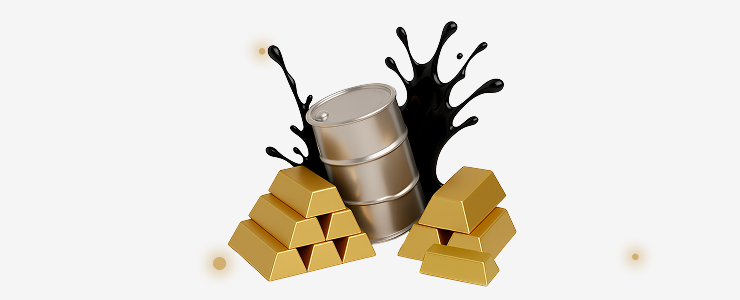
Energy markets are among the most active in the commodity space during the Commodity Boom. Prices heavily depend on the decisions made by OPEC+ regarding supply management. However, energies also react strongly to supply and demand shifts caused by the world’s volatile geopolitical environment.
Crude oil and natural gas are at the top of the energy assets on most traders’ lists. Their sharp reactions create short-term opportunities. Major news events can also trigger strong moves from bulls and bears for mid- to long-term traders.
Metals are the next most sought-after category. They play a unique role as both stores of value and essential materials for industrial activity.
Precious metals are traders’ favourites because of this dual nature. Gold, in particular, has been performing strongly, with silver close behind in recent times. Gold acts as a hedge against currency weakness. This makes it especially attractive when inflation is high and currency stability is uncertain.
Finally, agricultural commodities, while receiving less attention than energy and metals, can offer excellent diversification and trading opportunities. The key is understanding their unique drivers. Weather conditions play a critical role, while planting and harvesting cycles create strong seasonality. Traders who understand these dynamics and know where primary agricultural production is concentrated can strengthen the resilience of their portfolios.
Why Commodity CFDs Matter in the Commodity Boom
While commodities are not as restrictive in global access as top global stocks, traders worldwide still prefer to trade them as CFDs. Let’s explore the factors that contribute to this preference.
Firstly, CFDs allow traders to easily speculate on both rising and falling markets. This flexibility removes the need to wait for a major rally, which can be unpredictable.
Next, the relatively low investment thresholds offered by most CFD brokers make commodities more accessible. Combined with leverage, this allows more traders to enter the market with less capital. However, leverage should be used carefully, as it can amplify losses just as quickly as gains.
Finally, CFD brokers provide access to a wide range of global markets alongside commodities. This makes trading more convenient, as traders can manage their entire portfolio from a single platform.

Trading Commodities: The Most Common Mistakes
As noted earlier, trading commodities during the Commodity Boom is not simple. The first mistake many traders make is treating commodities the same way they trade forex or indices. They overlook the unique market conditions and focus only on economic factors. This often leads to overtrading during news events and ignoring price-driving forces that are less visible in other markets.
Similarly, traders often approach the Commodity Boom as a single market, rather than recognising its three distinct subgroups. Energies, metals, and agriculture each have their own drivers, and understanding these differences is essential for making informed decisions. On a practical level, commodities are also known for their high volatility.
While this can be intimidating, it creates opportunities through breakouts, trend-following setups, and news-driven trades. However, these conditions can encourage reckless behaviour. To manage this, traders should size positions carefully, understand contract specifications, and use stop losses to protect against sudden market reversals.
Approaching Commodities the Right Way
So, let’s say you’ve decided that you want to tap into opportunities you haven’t explored before with commodities, but you’re not sure how to begin during the Commodity Boom.
The answer, luckily, is far more straightforward than you might expect.
Like any other asset group, it starts with education. Familiarise yourself with the assets you are interested in, their key drivers, and how they behave in different market conditions.
Practice naturally follows. You can open a demo account with Xlence or your broker of choice and trade commodities without risking real capital. While this will not generate profits, it allows you to gain experience and test how well your knowledge applies to real market scenarios.
Finally, focus on safety. Once you gain confidence, avoid becoming reckless. Apply solid risk management, size your positions correctly, and stay clear of emotional trading. Take a gradual approach, expand your asset exposure over time, and you will be well positioned to navigate the Commodity Boom with confidence.
DISCLAIMER: This content is for general informational and educational purposes only and should not be considered investment advice or investment recommendation.