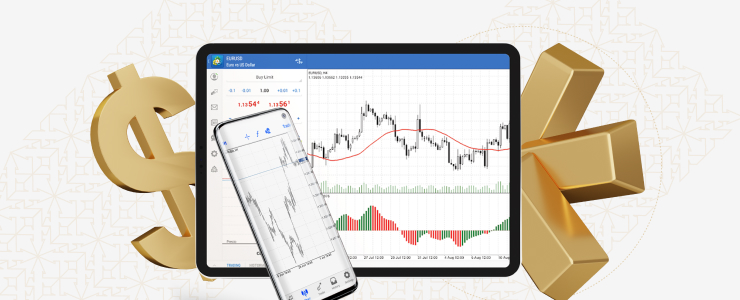



A market index is a group of investments that shows how a specific part of the financial market is performing. Analysts calculate its value from the prices of the assets it includes, and they weight some indices by market capitalization, revenue, or other factors. When viewed together, global trading indices offer a broader picture of economic performance, reflecting how different regions and sectors respond to changing market conditions.
Weighting is a method of adjusting how much each investment affects the index. Indexes make it easier to understand and analyse complex markets by combining many individual assets into one figure.
There are market indexes for different asset classes, including stocks, bonds, and commodities. These indexes allow investors to track performance in different parts of the economy. Indexes often react quickly to economic news, interest rate changes, and shifts in investor sentiment because they show changes in prices and valuations.
Investors watch different market indexes to see how markets are moving. The three most well-known stock indexes are the Dow Jones Industrial Average (DJIA), S&P 500 Index, and Nasdaq Composite Index.
For bonds, the Bloomberg U.S. Investors widely use the Aggregate Bond Index. Since they cannot invest directly in an index, they use these portfolios as benchmarks to track an index fund’s performance or to create one.
These index-based products are popular with both individual and institutional investors because they give investors a lot of market exposure at a low cost.

How global trading indices are calculated
There is a different way to calculate each market index, but most use weighted average mathematics. The index value is based on a weighted calculation of the total portfolio, with some holdings having a bigger effect on the index than others.This method of calculation shows how much the index changes when certain stocks or sectors change.
In a price-weighted index, stocks with higher prices have a bigger effect on index movements. In contrast, market capitalisation-weighted indexes will be most affected by changes in the largest stocks, and so on, depending on the weighting characteristics.
Market indexes as benchmarks
Indexes generally act as benchmark comparisons for different purposes across the financial markets. Investors widely use the Dow Jones, S&P 500, and Nasdaq Composite as benchmarks for U.S. stocks. Investors compare their portfolio returns to these benchmarks to evaluate whether their investment strategies are successful.
These indexes include the 30 largest stocks in the U.S. by market cap, the 500 largest stocks, and all stocks listed on the Nasdaq exchange, respectively. Since they include major U.S. stocks, they can be a good representation of the overall U.S. stock market. Analysts often consider the S&P 500 the most accurate single indicator of U.S. equity market performance because it covers a broad range of stocks.
Other indexes have more specific characteristics. For example, indexes might focus on particular sectors, bond maturities, or geographic regions. An example of a geographically focused index is the FTSE 100, which tracks major companies listed in the United Kingdom. Investors can see how well certain parts of the economy are doing by looking at sector-specific indexes, such as energy or healthcare indexes.
Investors can build a portfolio by investing in a mix of different indexes or by buying individual stocks from different indexes. They can also keep track of investments by using benchmark values and performance.
Some investors will choose how to spread their investment across different market sectors based on the returns or expected returns of certain market sectors. Investors can use a specific index as a benchmark for a portfolio or a mutual fund. This benchmarking process is very important in portfolio management and investment decision-making.

Major global trading indices in stock markets
The Dow Jones Industrial Average, the S&P 500, and the Nasdaq Composite are the three most popular U.S. stock indexes. For international markets, the Financial Times Stock Exchange 100 Index and the Nikkei 225 Index are well recognised indicators for the British and Japanese stock markets, respectively. Other widely followed global indexes include the DAX in Germany and the Hang Seng Index in Hong Kong.
Indexes give investors a simple view of a large market sector without examining every individual asset.
For example, studying hundreds of technology companies is impractical. A sector-wide index, like the NASDAQ-100 Technology Sector Index, shows the sector’s average trend.
By summarising performance this way, indexes let investors track market movements, compare returns, and build index funds or benchmark portfolios. This efficiency makes indexes especially valuable in fast-moving global markets.
Broad-based and global indexes
A broad-based index represents a wide range of stocks or an entire market. The Dow Jones Industrial Average (DJIA) ranks among the smallest broad-based indexes, as it holds only 30 stocks. The FT Wilshire 5000 Index (FTW5000) is one of the largest.
Other examples of broad-based indexes include the S&P 500 Index, the Russell 3000 Index, and the NASDAQ Composite Index. Investing in index funds based on these indexes is a way to diversify investments without investing a lot of capital.
The stock market as a leading economic indicator
The stock market is considered a leading economic indicator because stock prices reflect expectations about future earnings and economic conditions.
A strong market could suggest that earnings estimates are up, which could mean that the economy as a whole is doing well. On the other hand, a declining market could mean that company earnings are going to go down. However, the stock market isn’t always a reliable indicator because the relationship between performance and estimates is not guaranteed.
Stocks are also subject to price manipulations caused by Wall Street traders and corporations. Manipulations can involve inflating stock prices through high-volume trades, complex derivatives, and creative accounting, whether legal or illegal. The stock market can also experience “bubbles,” which are similar to false positives about the market’s direction.

Stock market limitations and economic health
While stock market indexes provide valuable insights, they do not reflect the health of the whole economy.
Instead, they mainly show investor confidence in the economy’s direction. Most indexes include large public companies, leaving out small businesses, private companies, and informal economic activity.
Changes in the stock market can still affect the real economy. Businesses and investors often adjust spending and investment based on market performance.
At certain times, indexes can give a false picture, especially when markets are affected by manipulation or speculative bubbles. During these periods, factors such as new financial products, high leverage, or poor accounting can push asset prices too high to be sustainable long term. When these bubbles burst, markets can reverse quickly, showing that the economy is weaker than it previously seemed.
Conclusion
Global market indexes are a useful way to understand economic trends because they show investor expectations, company performance, and overall economic conditions. While they don’t capture every aspect of economic activity, global trading indices often provide insights that traditional indicators miss. When analyzed carefully and combined with other data, global trading indices can offer a deeper and more accurate understanding of the global economy.
DISCLAIMER: This content is for general informational and educational purposes only and should not be considered investment advice or investment recommendation.